The Delse Shop recently announced these women as changers of the beauty industry in Ghana and we couldn’t agree more. These women are providing natural beauty products and solutions that are helping to redefine natural beauty as we know it. In this article we share with you 5 Ghanaian women changing the beauty industry in Ghana.You can check out stories of other amazing women in business here
VIOLET A. AMOABENG (SKIN GOURMET)
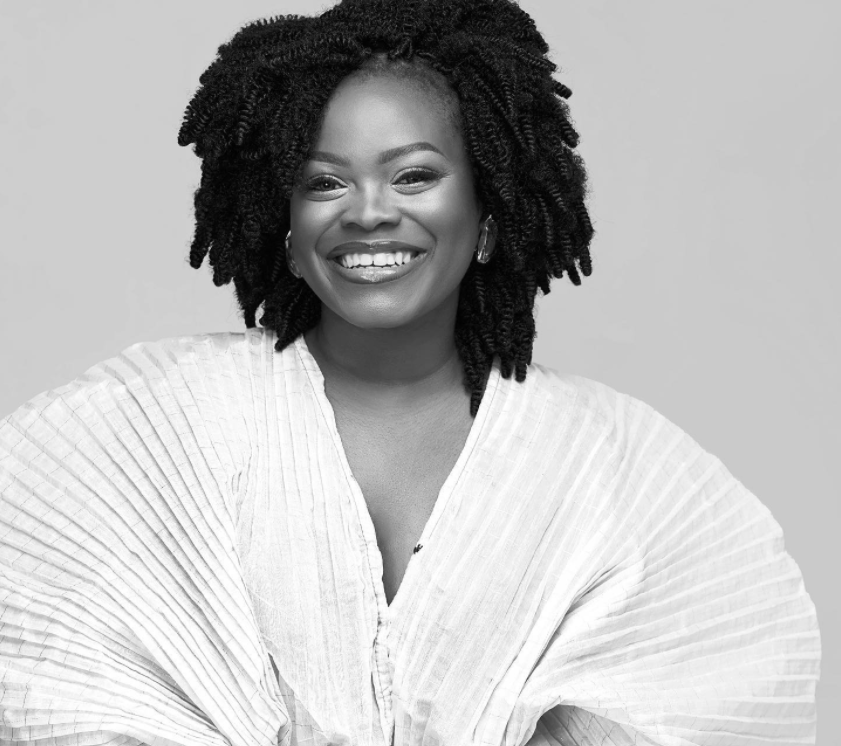
The first Ghanaian woman changing the beauty industry in Ghana that we would like to throw the spotlight on is Violet A. Amoabeng is the Founder and CEO of Skin Gourmet Limited, a Ghanaian start-up that produces raw, handcrafted skincare products so pure you could eat them. She is one of the female entrepreneurs changing the beauty industry in Ghana in recent times.
Violet founded Skin Gourmet about 5 years ago after recognizing a demand for unadulterated, high-quality body care products.
Her company’s products are entirely handcrafted with traditional Ghanaian procedures that retain them in their purest form.
Violet has always been a lover of mother earth. This forced her to focus on creating a unique line that is sustainable and forward looking.
She hopes to teach Africans that their culture should be preserved .
In her own “Nature is perfect – its man that is flawed. And our African traditions respect, enhance and preserve nature.”
Her admonition to all Africans is to make the effort to preserve our tradition by adapting our bodies and lifestyles to suit nature instead of the other way around.
FULERA SEIDU (NZUA)
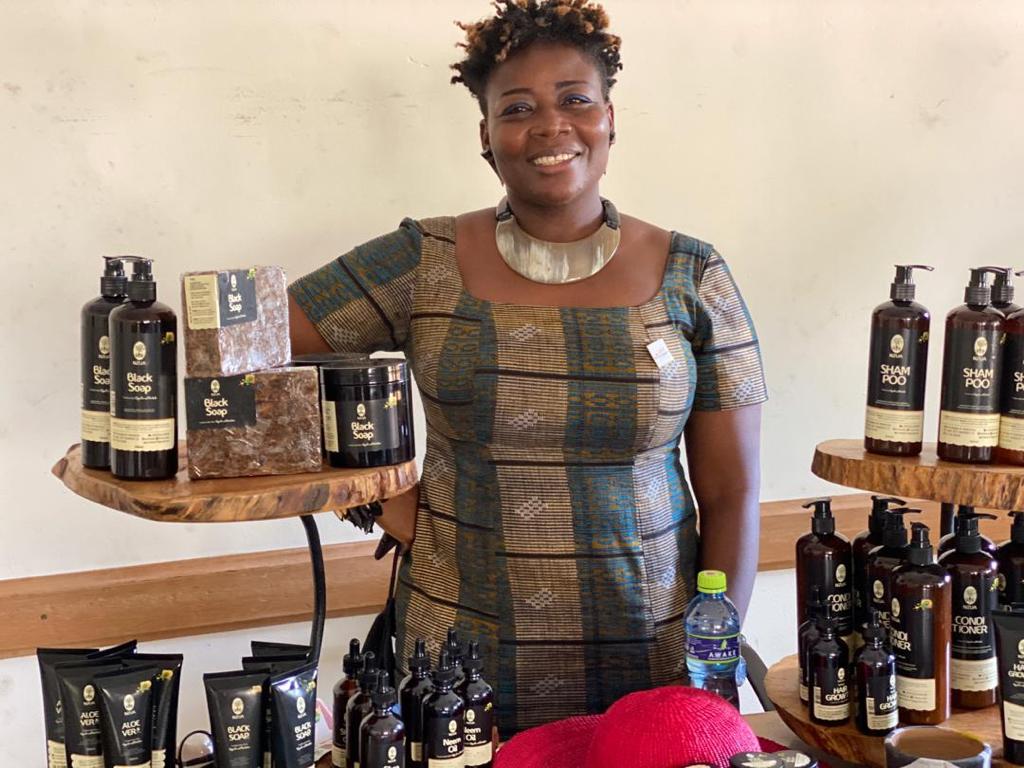
Fulera Seidu is the originator of the Nzua by Nature brand another authentic brand in the beauty industry in Ghana; formulators of natural based skin and hair care products.
She is also an indigenous jeweler who offers white labeling services for businesses. Fulera originates from a traditional household in Ghana’s Upper East Region.
Following a tough childhood, she learnt to tune into herself and leverage on her talents and abilities to survive and succeed. As such, her decision to pursue art and crafts was a watershed moment in her life where she found that she had a natural drive to express herself through distinctive items made from natural materials.
She has since gone on to produce jewelry, skin and hair care products using natural materials and African inspired designs.
She goes throughout West Africa in search of the greatest and most appropriate materials to bring real African patterns and culture to life.
Her love of nature has served as an inspiration for her work, which is evident in her designs.
Fulera creates 100% green accessories by using wood, leather, cow horn, bone, as well as repurposed glass beads.
She is dedicated to her work and takes the time to give each piece a professional finish.
Fulera hopes to set up a workshop where she can train youths, particularly those from underprivileged backgrounds in the community.
TUTUWAA AHWOI (NOKWARE)

Tutuwaa is a marketing professional and founder of Nokware Skincare another top of the class beauty brand changing the beauty industry in Ghana.
The company was founded on a family heritage of making products with traditional African herbs and oils.
It all began when Tutuwa Ahwoi met Thato Tau from Botswana while studying in Paris.Tutuwa showed Thato how to make black soap using pure shea butter. When the two returned to their respective home countries, Thato requested that Tutuwa continue to bring her the things that were not accessible in Southern Africa. Soon Thato’s friends began asking for them as well.
Over time, what began as a group of friends merely exchanging beauty secrets grew into a company selling natural skincare products in Ghana, Botswana, Europe, and North America.
In September 2017, Nokware officially launched a product line of African Black Soap created with shea butters, and materials gathered from local women’s cooperatives in West Africa.
She makes Nokware products, utilizing traditional know-how skincare techniques she learnt from her great-grandmother, who also helped her understand the concepts of simplicity and self-love.
As such, Tutuwa set out to build a firm based on the concepts of simplicity, sustainability, and self-love.
The company operates on a community commerce model that emphasizes fair pricing, giving back to the communities it serves, and empowering individuals who have not had equal opportunity to earn a living.
They also recently launched the Inclusive Beauty Movement in order to promote selflove.
There is also a campaign underway to combat colorism and underrepresentation of different skin tones in the media and the beauty industries.
Tutuwa wants to transform the way people think about beauty by advocating for underrepresented skin tones as a distinct shade of beauty that should be cherished.
SHARON AGYAPONG (EYA NATURALS)
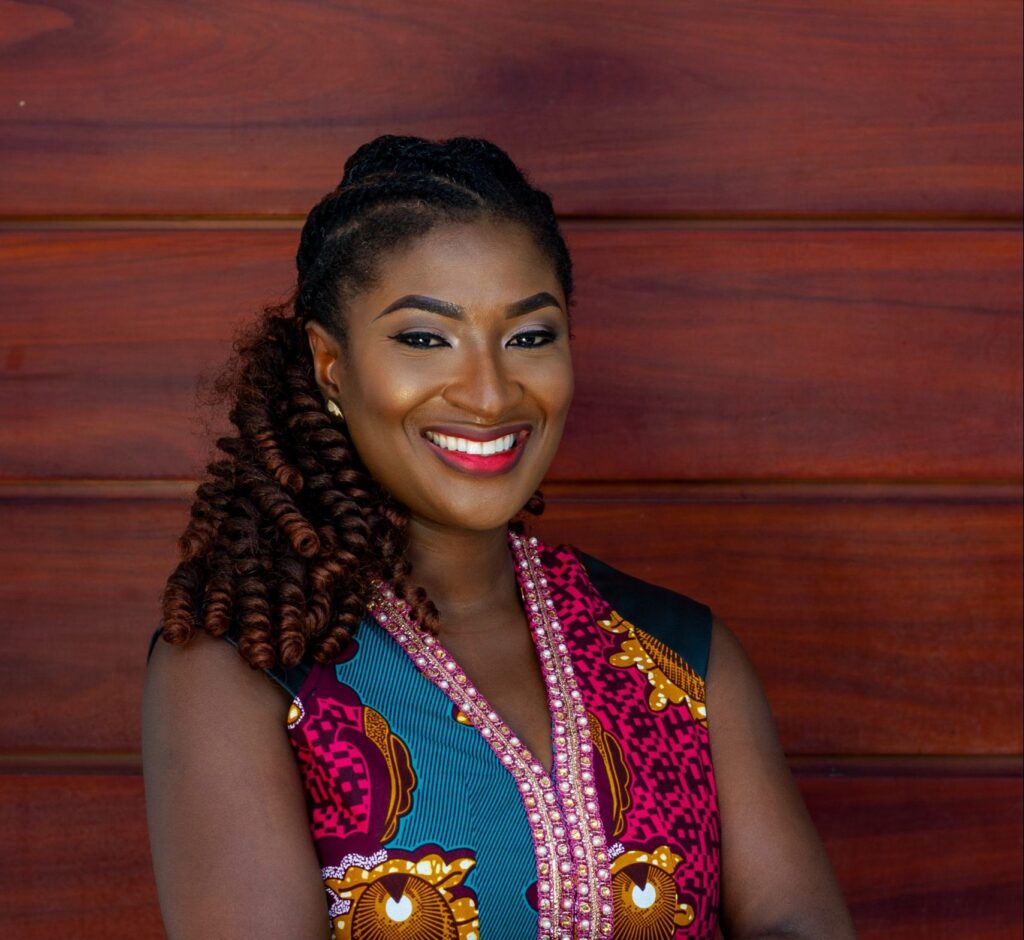
Sharon Agyapong is another powerful Ghanaian woman changing the beauty industry in Ghana . She is the founder of Eya Naturals Limited, a natural-products focused cosmetics company and Kaydua Luxury, a range of skincare products.
Despite a stellar career in economics, finance and telecommunications, Sharon moved into entrepreneurship to start the Eya brand.
The brand’s products are inspired by the finest local natural African ingredients that have been used effectively in Africa for centuries, to protect hair and skin.
The products are also aimed at serving as a safer, natural alternative to existing products. As such, they do not contain Sulfates, Parabens, Mineral Oil or Petrolatum.
By this, Sharon hopes to register the Eya brand’s commitment to providing consumers with the safest hair and skin care products.
Sharon started her business from her home but has successfully scaled up to serve clients in the United States, Nigeria, Togo, Rwanda, the Democratic Republic of the Congo, Sierra Leone, Liberia, Zimbabwe, and Japan.
Among her most reputable clientele are Samira Bawumia, Naa Ashorkor Mensah Doku and famous Ghanaian hip-life musician Captain Planet.
Sharon attended University Primary and JSS in Legon before going on to Akosombo International School to study Economics, Geography, and Mathematics.
She was accepted to Mount Holyoke College to pursue a Bachelor of Economics degree after graduating from high school. Thereafter, she worked in the finance field in the United States before leaving to Ghana.
Her most recent position was as Diageo Ghana as Head of Strategy, a position she vacated to work full time on her Eya and Kaydua brands.
Eya Naturals Limited has since gone on to operate a number of salons and spas across the country.
ISRAELLA KAFUI MANSU (MGL NATURALS)
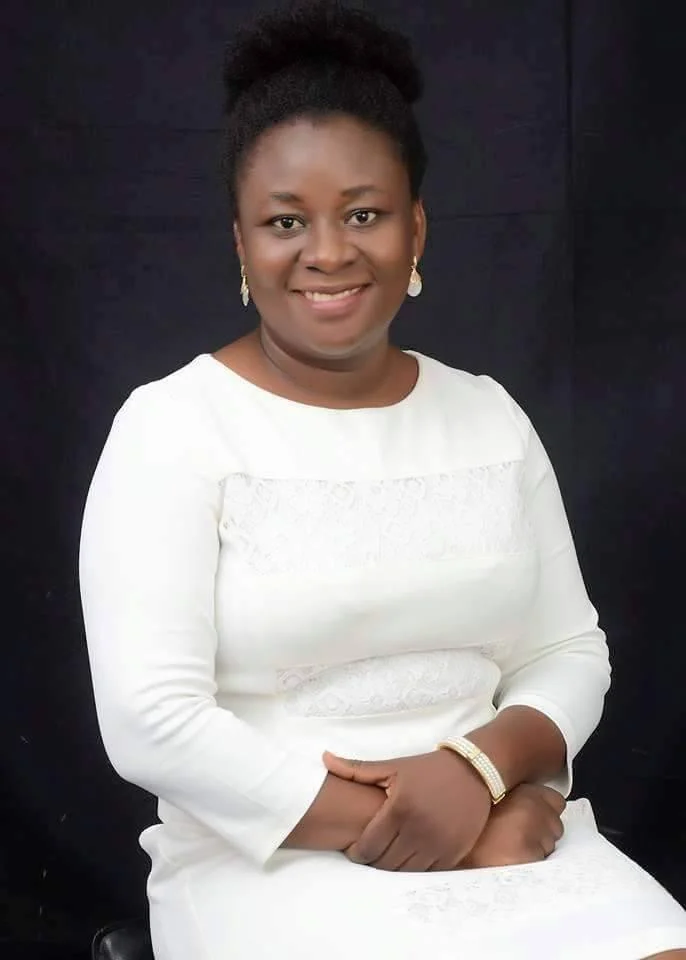
Israella Kafui Mansu is also another Ghanaian woman changing the beauty industry in Ghana and is the founder of MGL Naturals. The brand has grown tremendously since its birth in 2009, and is now recognized as one of the best natural skin and hair care products made in Ghana.
Israella started the company after she couldn’t find any employment. She had at the time just completed her national service, after earning a degree in Consumer Science and Psychology from the University of Ghana.
The situation inspired her to create something for herself. It was then that she started using her kitchen as a laboratory, where she created and prepared the first few beauty goods, using her life savings of GHS300. She continued to conduct researches and develop designs to transform the brand to meet both domestic and international markets in Africa, Asia, the United States, and Europe.
Israella is an advocate for made in Ghana products. This is evident in how she proudly displays the Ghanaian flag on her product packaging.
She is dedicated to addressing developmental issues, establishing long-term employment, and mentoring emerging entrepreneurs.
To this end, she employs and educates under served rural women and youths, teaching them technical skills such as manufacturing soap, body cream/butter, and hair pomade, as well as packaging, marketing, and other fundamental business skills.
Israella Kafui Mansu saw the high rate of unemployment among Ghanaian youngsters and the dearth of vocational skills training as a chance to establish her own business.
She found solutions to the developmental difficulties she noticed in her community at the age of 24, while she was unemployed.
This is why she creates, manufactures, and sells high-quality handcrafted and natural hair and body care products both locally and internationally.